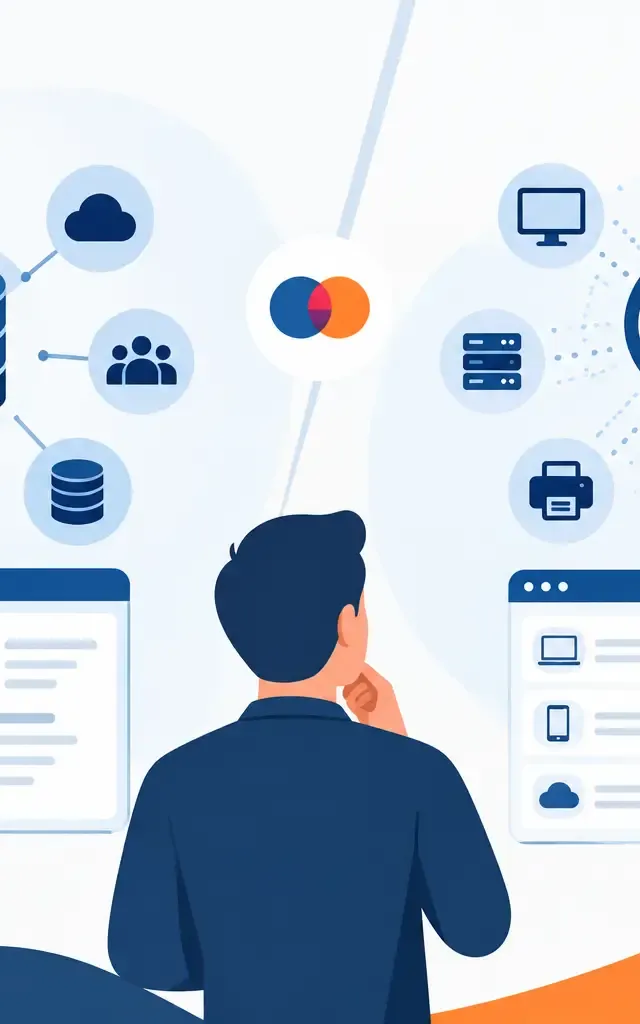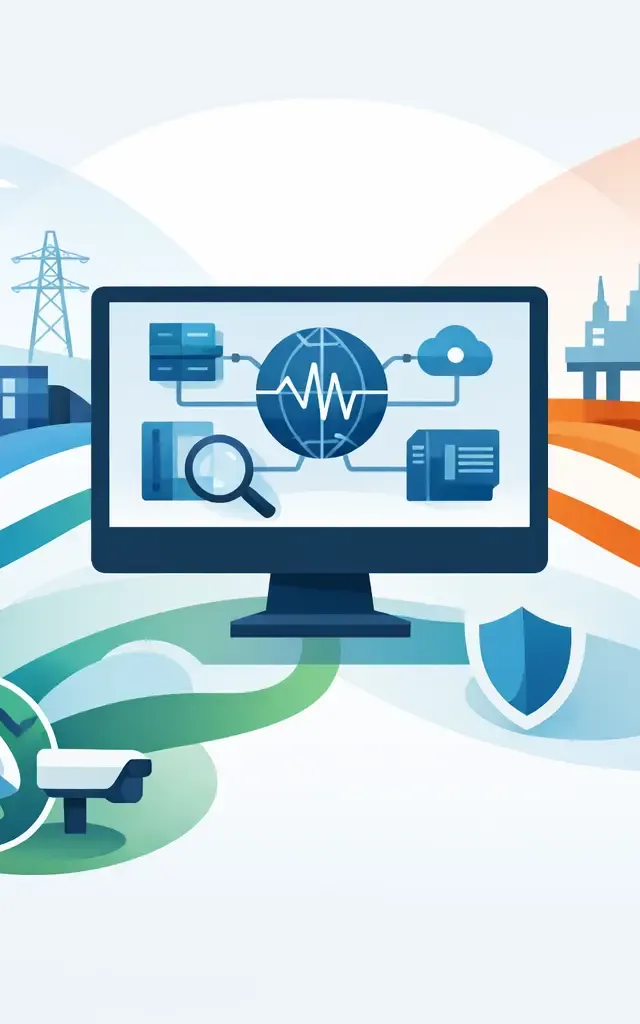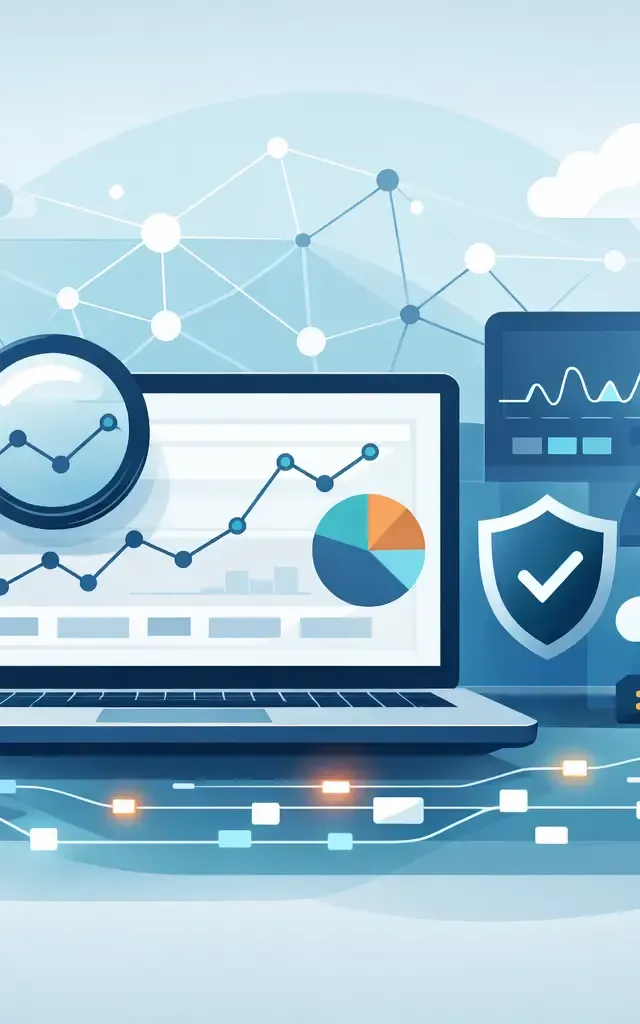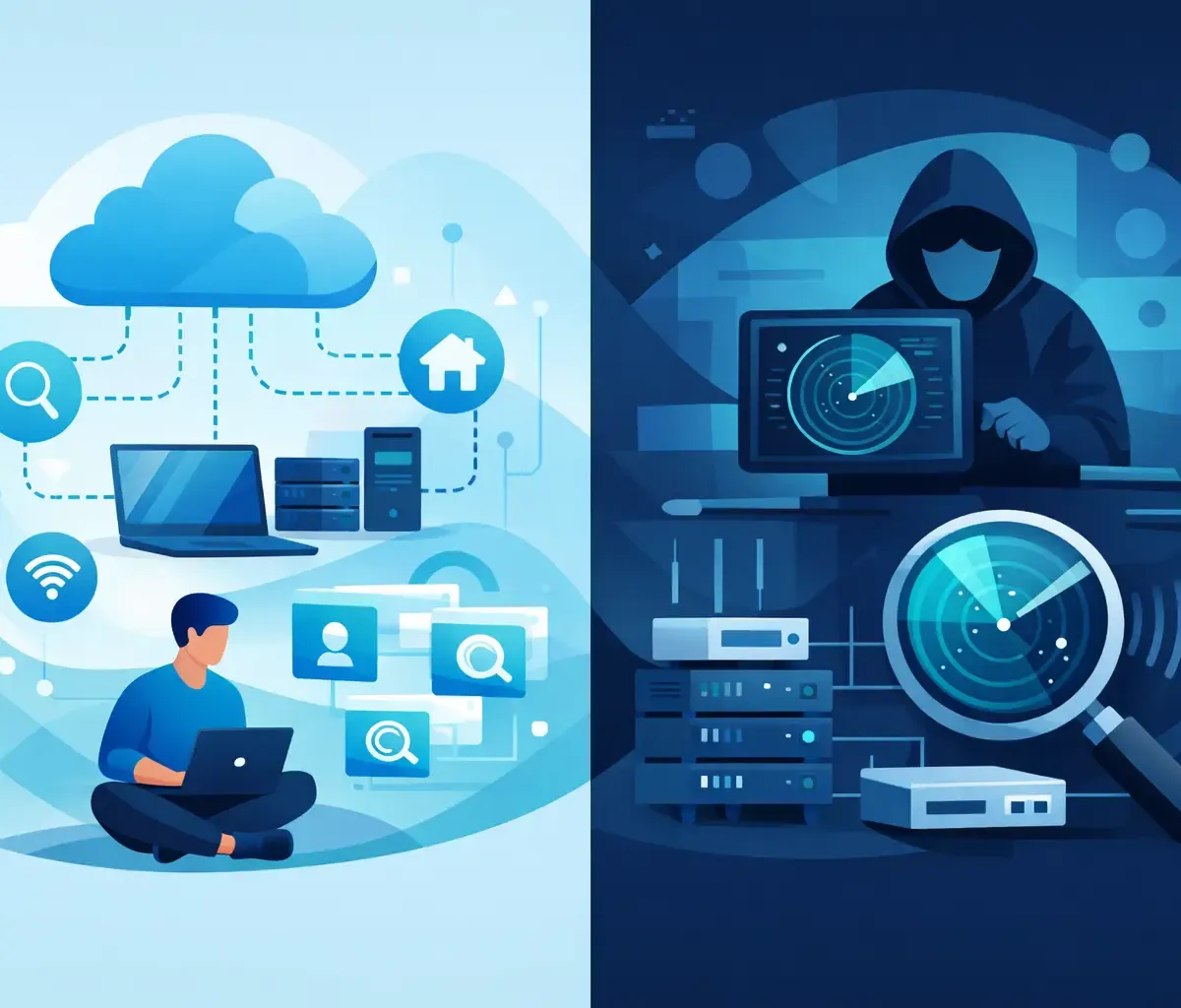
A quarterly scan can tell you what answered on the network at a particular moment. It cannot reliably tell leadership whether that asset supports a critical service, who owns it, whether its configuration has changed since the scan, or what evidence exists for an auditor. That is the practical distinction behind agentless discovery versus network scanning. Both have a role in reducing cyber risk, but they produce different kinds of visibility and demand different operating models.
For organisations managing hybrid estates, the wrong question is often, “Which tool finds the most devices?” The better question is, “Which approach gives us current, defensible answers about assets, services, exposure and accountability?”
Agentless Discovery Versus Network Scanning: The Core Difference
Network scanning is an active technique. A scanner sends probes across defined IP ranges, ports and protocols, then records what responds. Depending on the configuration and credentials available, it may identify operating systems, open ports, installed software, missing patches and selected configuration weaknesses. It is a valuable control, particularly for vulnerability assessment and validating exposure across known network segments.
Agentless discovery does not require software to be installed on every endpoint, server or workload. It gathers intelligence through existing sources such as network telemetry, directory services, cloud control planes, virtualisation platforms, endpoint-management systems, identity providers, APIs and configuration records. Some agentless products also use active queries. Others are deliberately scanless, relying on passive observation and authoritative system integrations.
That distinction matters. Agentless does not automatically mean scanless, and scanless does not mean incomplete. A scanless approach may provide a richer, more continuous record of relationships and business context than a periodic scan, while an active scan may expose a service that no integration currently sees. The strongest visibility strategy is built around the decisions the organisation needs to make, not a claim that one technique replaces every other technique.
What Network Scanning Does Well
Network scanning remains useful because it is direct. It can test whether a host or service is reachable from a particular location and identify exposed ports that should not be available. For external attack-surface checks, segmented environments and new network ranges, active probing can quickly reveal systems that have not yet been registered in another management platform.
It is also familiar. Security teams know how to schedule scans, assess findings and demonstrate that vulnerability checks have been performed. Where authenticated scanning is possible, it can provide meaningful technical detail about patch state and insecure configurations.
The limitations appear when scanning becomes the primary source of truth. Results are point-in-time observations. A device that is offline during the scan, behind a transient connection, on an isolated OT segment or operating in a cloud environment without a stable IP address may be absent or poorly represented. Credentials can fail, scan windows can be restricted, and sensitive services may require careful rate limiting to avoid operational disruption.
Scanning also creates work. Teams must maintain target lists, credentials, exclusions and scheduling rules, then investigate duplicate records and findings with limited ownership or service context. A list of 20,000 vulnerabilities is not a risk decision. Without knowing which assets support payroll, patient care, production, public services or a customer-facing application, prioritisation remains largely manual.
Where Agentless Discovery Changes the Operating Model
A mature agentless discovery model starts with evidence already generated by the environment. Cloud platforms know what workloads, identities, security groups and subscriptions exist. Directory services know which users, groups and devices are active. Network telemetry can show communication patterns, dependencies and previously unknown devices. IT service-management and endpoint-management platforms can add ownership, location, lifecycle and compliance status.
By correlating these sources, teams can build an asset and service picture that is broader than IP addresses. They can see that a server is not simply a Windows host with a vulnerability, but part of an application service, owned by a particular team, dependent on a database, exposed through a defined route and subject to a particular control requirement.
This is especially relevant in estates spread across Microsoft 365, Azure, AWS, Kubernetes, Intune, Active Directory and on-premises infrastructure. Traditional network scans remain useful in parts of that estate, but they cannot independently provide complete visibility across SaaS, cloud identities, ephemeral containers and assets that are not continuously addressable from the scanning network.
The operational benefit is continuity. Rather than waiting for the next scan cycle, teams can use changes in the connected environment as evidence: a new asset appears, an identity gains privilege, a cloud configuration changes, a service begins communicating with an unexpected destination, or a device drops out of management. That enables investigation closer to the point of change.
Coverage Is Not the Same as Confidence
It is tempting to compare tools by the number of assets found. That can be misleading. A scanner may identify an IP address but not its business owner. A cloud API may show a virtual machine that has been decommissioned but remains in an inventory record. A passive network source may observe a device but not expose the configuration required to assess a specific vulnerability.
Confidence comes from correlation, recency and provenance. Can the team explain where the record came from? Can it show when it was last observed? Can it distinguish an active asset from an old administrative record? Can it link the asset to a service, owner, control and risk decision?
This is where security, IT operations and audit requirements meet. An auditor does not only need a spreadsheet showing that a scan ran. They need evidence that the control operates, exceptions are visible, ownership is clear and remediation can be tracked. Leadership needs a similarly direct view: what is exposed, what is material, what is being done and what risk remains.
The Trade-offs to Plan For
Agentless discovery reduces endpoint deployment overhead, but it depends on access to authoritative data sources. API permissions, data quality and integration scope need governance. If a cloud account, business unit or network domain is not connected, the platform cannot infer everything that happens there. Passive techniques may also need appropriate telemetry collection points to provide useful coverage.
Network scanning has different dependencies: reachability, suitable credentials, safe scanning policies and a maintained target scope. In regulated, operational technology or high-availability environments, the method and timing of active scanning must be agreed with service owners. An aggressive scan that affects a critical service is not evidence of good assurance.
Neither model removes the need for judgement. A critical internet-facing service may warrant continuous external assessment and authenticated checks, alongside agentless service mapping and identity visibility. A remote site with unmanaged equipment may require passive discovery first, followed by tightly controlled validation. A public cloud estate may gain more from control-plane intelligence than from broad network sweeps.
Build Visibility Around Business Services
The most effective programmes do not force teams to choose a single discovery method. They establish a continuous asset intelligence layer, then use scanning where active validation provides unique value. That shifts scanning from a noisy inventory mechanism to a targeted assurance activity.
A practical model is to use agentless and scanless intelligence to maintain the live view of assets, identities, dependencies and ownership. Active scanning can then focus on external exposure, unmanaged segments, high-risk services and technical validation where authenticated detail is required. Findings should flow back into the same service context, so remediation teams know what to fix first and executives can see why it matters.
This also supports tool consolidation. Instead of asking separate teams to reconcile network discovery, cloud inventory, vulnerability findings, configuration data and compliance evidence by hand, organisations can establish a common record of what is connected and what supports each business service. Rebasoft is designed around this outcome: continuous intelligence that helps teams prioritise action and give leadership answers they can trust.
Choose Based on the Assurance Question
If the question is “What is reachable from this network point?”, scanning is often the right tool. If it is “What assets, users, services and control changes create material risk across our estate?”, agentless discovery provides a stronger starting point. If the question is “Can we prove that controls are operating continuously?”, the answer will usually require correlated evidence from more than one source.
The immediate opportunity is not to run more scans or collect more telemetry. It is to make every discovery signal useful: attributable to an owner, connected to a service, measured against a control and prioritised by business impact. That is how visibility becomes assurance rather than another queue of technical alerts.