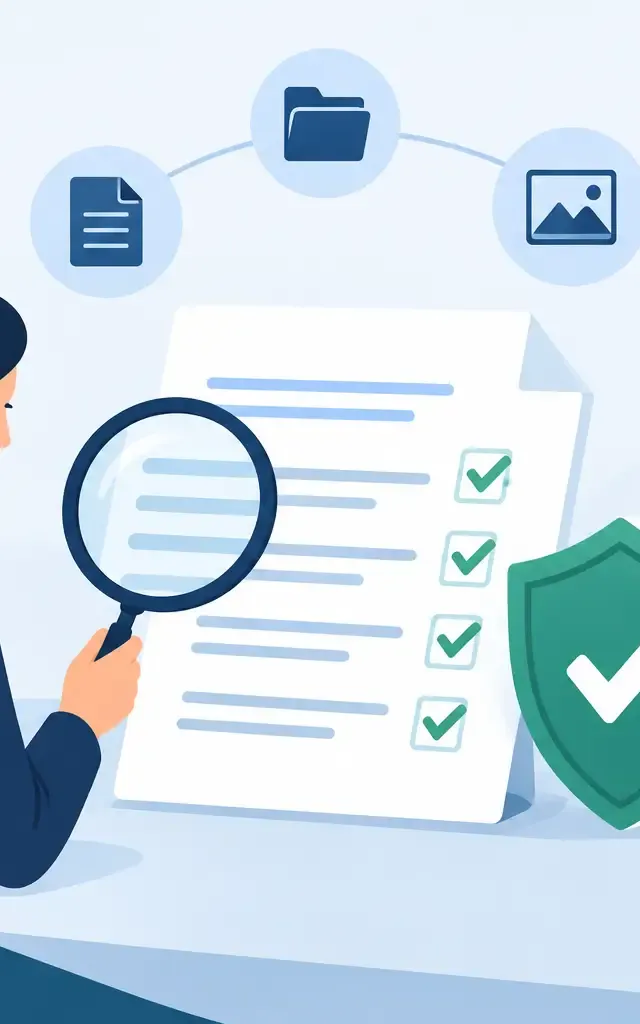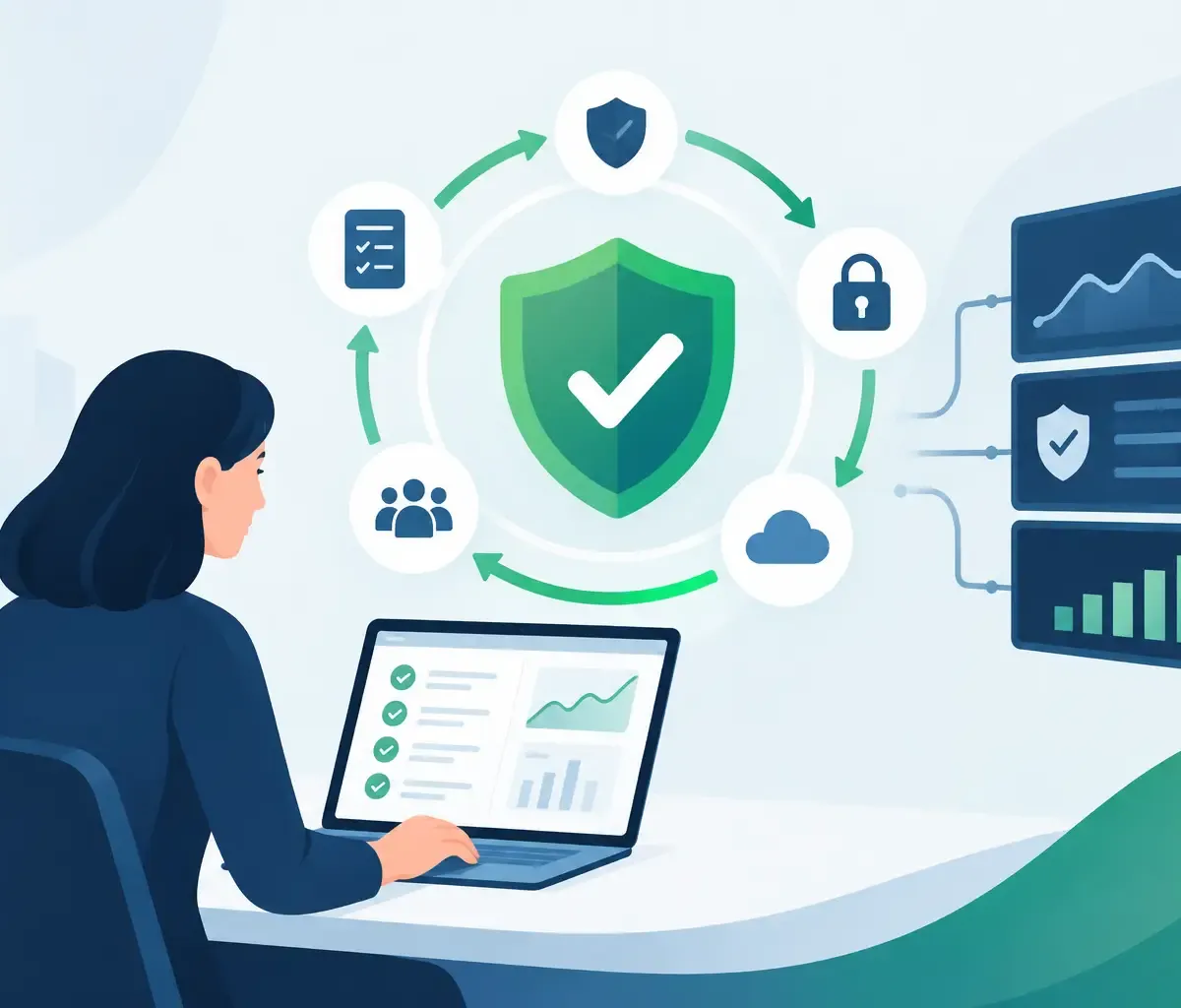
A failed control rarely announces itself before an audit, a customer due-diligence request or a security incident. A privileged account may retain excessive access after a role change. A cloud workload may drift from its approved configuration. An unmanaged device may connect to the network without appearing in the asset register.
That is why the answer to what is continuous compliance monitoring matters beyond the compliance team. It is the ongoing process of checking whether an organisation’s assets, identities, configurations and security controls continue to meet required policies, standards and regulatory obligations - and producing evidence that leadership and auditors can trust.
Unlike periodic assessments, continuous monitoring is designed to reveal changes as they occur. It turns compliance from a retrospective exercise into an operational discipline that supports risk reduction, resilience and more confident decision-making.
What is continuous compliance monitoring in practice?
Continuous compliance monitoring collects and assesses evidence from across the technology estate on an ongoing basis. This can include on-premises infrastructure, cloud environments, Microsoft 365, endpoints, identity platforms, containers, network devices and operational technology, depending on the organisation’s scope.
The objective is not simply to generate a pass or fail score. A useful programme answers practical questions: What is connected? Which controls are not operating as intended? Which business services are exposed? Who owns the issue? Has the risk been fixed, accepted or left unresolved?
For example, a policy may require multi-factor authentication for privileged users, encrypted endpoints, timely patching for critical vulnerabilities and restricted access to sensitive data. Traditional compliance activity may test those requirements once a quarter or before an annual audit. Continuous monitoring checks the underlying state repeatedly, identifies drift and retains evidence over time.
That distinction is significant. A control that passed in April may be ineffective by May after a configuration change, a new application deployment or an identity administration error. Point-in-time compliance cannot give leadership assurance about the state of the estate between reviews.
Continuous monitoring is not just more scanning
Many organisations already have vulnerability scanners, configuration tools, identity systems and governance platforms. Adding another feed of alerts does not automatically create continuous compliance.
Continuous compliance monitoring needs three capabilities working together: broad visibility, control validation and business-context prioritisation. Without visibility, unknown assets and unmanaged services sit outside the assessment. Without validation, policy statements remain assumptions. Without context, teams receive a long list of technical exceptions with no clear indication of what should be fixed first.
Scanning can contribute useful data, particularly for vulnerability assessment. But scan-only approaches can be slow, disruptive or incomplete, especially across dynamic cloud services, remote estates and sensitive operational environments. Agentless and scanless intelligence can complement existing controls by using authoritative sources and live infrastructure data to identify change without depending on another endpoint agent or a heavy scanning cycle.
The right approach depends on the environment and the assurance requirement. A high-risk internet-facing service may warrant frequent technical testing. A configuration standard for thousands of network-connected assets may be better assessed through continuous discovery and validation. The point is to establish reliable evidence, not to create activity for its own sake.
Why periodic compliance reviews leave gaps
Periodic reviews are familiar because they fit audit calendars. Teams gather screenshots, export reports, chase system owners and assemble evidence packs shortly before a review. The process can demonstrate that controls were examined, but it is labour-intensive and often gives a dated view of risk.
This creates several weaknesses. First, evidence gathering becomes a scramble, taking skilled people away from remediation and operational improvement. Second, control failures may persist for weeks or months before anyone identifies them. Third, auditors receive static artefacts that are difficult to trace back to the current environment. Finally, leadership sees compliance status as a reporting event rather than a live measure of operational assurance.
Continuous monitoring changes the working model. Evidence is collected as part of normal operations, exceptions are recorded when they emerge, and remediation can be tracked against accountable owners. When an audit begins, the organisation is not starting from a blank page. It can show how controls performed over time, where exceptions occurred and how decisions were made.
What should be monitored continuously?
The scope should reflect the organisation’s regulatory obligations, risk appetite and critical business services. Monitoring every possible technical signal is neither necessary nor efficient. Start with the controls that protect the services the organisation cannot afford to lose.
In most regulated or high-consequence environments, this includes asset inventory and ownership, secure configuration, identity and privileged access, vulnerability exposure, patch status, encryption, backup assurance, logging, network segmentation and third-party connectivity. Cloud posture and SaaS configuration are increasingly essential because critical data and business processes often sit beyond the traditional network perimeter.
The strongest programmes also connect technical controls to service impact. A missing patch on a test system and a missing patch on the platform supporting payroll, patient care or customer transactions may be the same technical issue, but they are not the same business risk.
This is where service context changes the conversation. Instead of asking teams to address thousands of exceptions in severity order, security and IT leaders can focus on the assets, identities and dependencies that support priority services. That improves remediation decisions and gives boards a clearer explanation of exposure.
From evidence to action
Continuous compliance monitoring is valuable only when it drives action. A dashboard full of red indicators may look comprehensive, but it does not reduce cyber risk unless teams can investigate, assign and resolve the underlying issues.
Effective programmes define what good looks like for each control, identify the data source that can verify it and agree who is responsible when it fails. They also distinguish between a genuine policy breach, an approved exception and incomplete data. This prevents reporting from becoming misleadingly absolute.
A practical workflow is straightforward. When a deviation is detected, the organisation should determine whether the affected asset supports a critical service, confirm the owner, assess the exposure and set a remediation path. If the issue cannot be fixed immediately, it should be formally accepted with a review date, compensating controls and clear accountability.
This approach creates an evidence trail that is useful for more than audit. It supports incident response, insurance readiness, supplier assurance and internal risk governance. It also helps security teams demonstrate progress in business terms: fewer unmanaged assets, reduced exposure across critical services and faster closure of control failures.
The role of automation and human judgement
Automation makes continuous monitoring possible at scale. It can collect data, compare configurations against policy, detect changes, correlate signals and generate evidence without relying on spreadsheets and manual screenshots.
However, automation cannot decide every compliance question. Controls are often subject to legitimate exceptions. A legacy system may need a compensating control while a replacement programme is under way. A public-sector environment may have operational constraints that prevent immediate patching. A service owner may accept a short-term risk to protect continuity of service.
Human judgement is therefore not removed. It is applied where it adds value: setting policy, assessing materiality, approving exceptions and deciding priorities. The technology should reduce the burden of finding facts so experienced people can make better decisions from them.
How to establish continuous compliance monitoring
Begin with the business services that matter most, rather than a broad but unprioritised catalogue of technical controls. Identify the applications, infrastructure, data and identities that support those services. Then map the policies, standards and regulatory requirements that apply.
Next, establish a trusted view of the estate. If asset records are incomplete, ownership is unclear or cloud and on-premises environments are assessed separately, compliance reporting will inherit those gaps. Discovery and service mapping are foundational because an organisation cannot evidence controls over assets it does not know it has.
Choose a manageable set of controls, define measurable tests and agree the evidence required. Establish remediation ownership and reporting thresholds before publishing executive dashboards. This avoids the common problem of exposing large volumes of exceptions without a workable route to resolution.
For organisations managing fragmented security and IT tooling, consolidation can improve both cost and assurance. A platform such as Rebasoft can bring asset and service intelligence, vulnerability exposure, configuration validation, identity visibility and compliance evidence into one operational view. The benefit is not another isolated score. It is a clearer route from technical change to business risk, accountable action and board-ready assurance.
Assurance that reflects the real estate
Compliance should not be a once-a-year performance supported by manually assembled evidence. It should reflect the actual state of the organisation’s services, systems and controls - including the changes that occur after the audit report is signed.
Continuous compliance monitoring gives leaders answers they can trust because those answers are based on current evidence, linked to operational ownership and weighted by business impact. The most useful next step is to select one critical service, prove the model around it and use the results to build assurance across the wider estate.